

High-velocity fulfillment centers are under constant pressure to move more product, handle greater SKU variety, and respond to demand spikes without sacrificing accuracy or uptime. As order volumes grow and delivery expectations shrink, many operations discover that their biggest problems are not pick rates or packaging speeds. The real challenges often live between processes.
Accumulation, routing, and flow control play a critical role in keeping fulfillment centers moving. When these elements are designed intentionally, they help protect throughput, absorb variability, and maintain steady flow even under peak conditions. When they are overlooked, small disruptions quickly cascade into congestion, downtime, and missed shipping windows.
As fulfillment operations increasingly pair intelligent conveyance with robotics and automation, these three elements become even more critical. Conveyance is no longer just about moving product. When matched with the right robotic work cells, it becomes a system that enhances ergonomics, improves safety, and supports higher throughput while maintaining accuracy.
Why Flow Breaks Down in High-Velocity Fulfillment
Fulfillment environments are inherently variable. Order profiles change by the hour, product mix shifts by season, labor availability fluctuates, and automated systems are expected to keep pace with all of it.
Breakdowns typically occur in three areas:
- Cycle time mismatches between picking, packing, robotic work cells, and outbound processes
- Lack of effective buffering, causing upstream slowdowns when a downstream process pauses
- Rigid routing paths that cannot adapt to congestion, automation availability, or changing priorities
Without accumulation and routing, conveyors become little more than high-speed traffic jams. Items arrive too quickly at choke points, backup spreads upstream, and operators are forced to intervene manually. This not only impacts throughput but also places additional strain on employees who must handle repetitive recovery tasks that automation and flow control could otherwise absorb.
Smart conveyance addresses these issues by treating the system as an interconnected flow network rather than a series of isolated conveyor runs.
Accumulation as a Strategic Asset, Not Just an Extra Conveyor
In many fulfillment centers, accumulation is added as an afterthought. A few extra feet of conveyor are installed to create space, but the accumulation itself is passive. Product stacks up, contact increases, and releases occur without information on downstream readiness.
Modern accumulation strategies are different. Accumulation is designed to:
- Absorb short-term disruptions without stopping upstream processes
- Protect product integrity by controlling pressure and contact
- Release product intentionally based on downstream capacity, including robotic cells
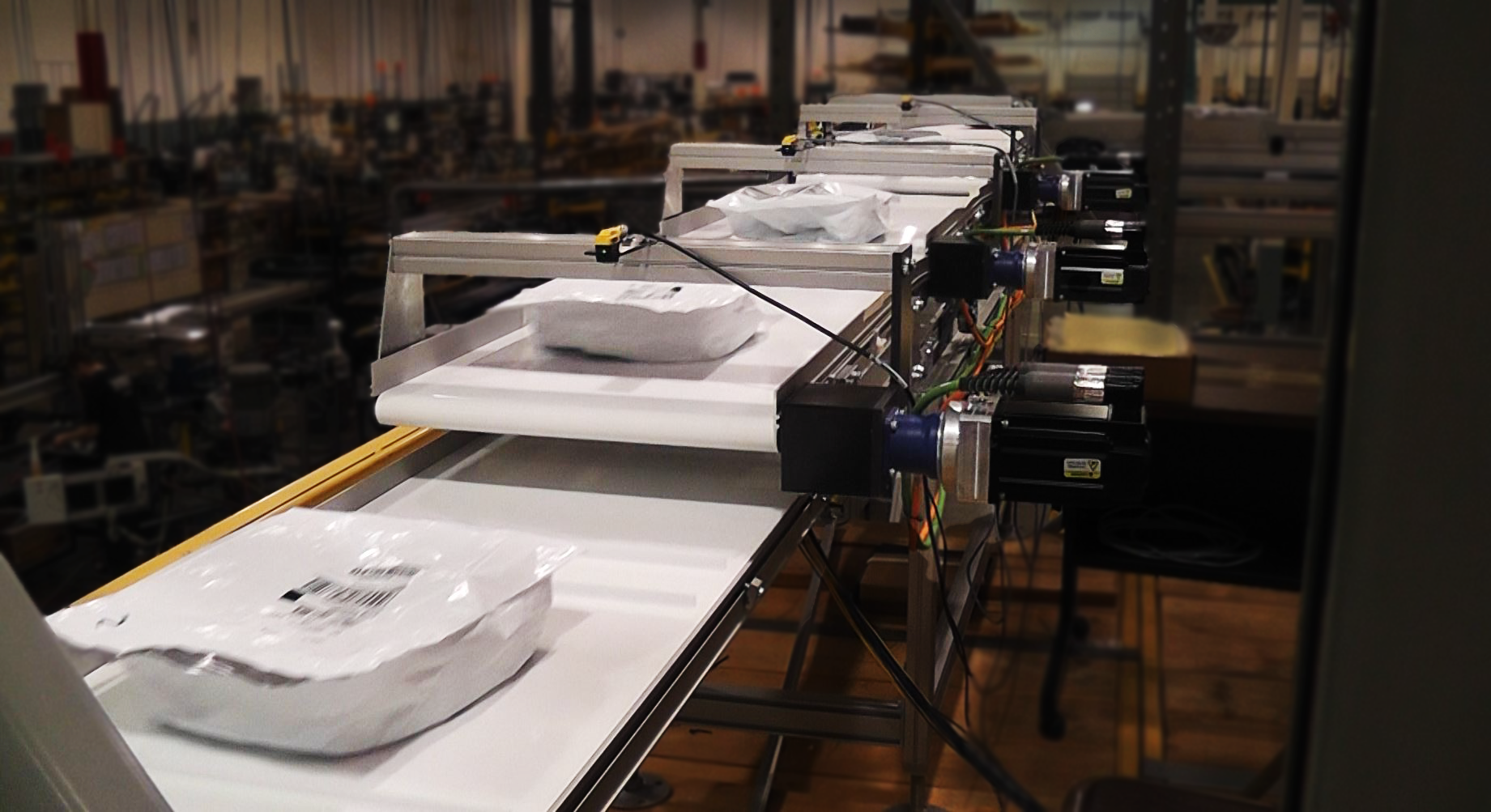
Accumulation tables and buffering zones, like those engineered by Garvey, are particularly effective in high-velocity environments. They allow items to queue dynamically without excessive back pressure, which is critical when feeding robotic packing, palletizing, or sortation systems. Rather than flooding a downstream process, accumulation creates breathing room.

This buffering also supports safer, more ergonomic operations. By stabilizing flow into robotic work cells, accumulation ensures robots can take over repetitive and physically demanding tasks consistently. Employees spend less time managing jams or performing manual recovery, and more time supervising, problem solving, and value-added tasks.
Routing That Responds to Real-Time Conditions
Routing is often designed based on an ideal state. In reality, fulfillment centers rarely operate under ideal conditions for long.
Fixed routing paths can create problems when order volumes shift, certain SKUs surge unexpectedly, or robotic cells temporarily slow due to changeovers or maintenance. Without routing flexibility, items are forced into congested areas, limiting throughput and compounding delays.
Smart routing focuses on optionality and responsiveness. Conveyance systems must be able to divert, merge, and redirect product dynamically based on real-time conditions. Dorner’s conveyorplatforms are well suited for this role, allowing fulfillment centers to reconfigure routing paths as operations evolve. Modular design makes it possible to introduce new lanes, add divert points, or reroute flow without rebuilding entire sections of the system.

As artificial intelligence becomes more common in fulfillment operations, routing decisions increasingly extend beyond physical layout. AI-driven systems can determine the right destination for each item based on order priority, SKU characteristics, system availability, and throughput targets. Conveyance must be flexible enough to execute those decisions without delay.
Flow Control as the Orchestrator of Throughput
Flow control ties accumulation, routing, and automation together. It controls when product moves, where it moves, and how fast it moves through the system.
In high-velocity fulfillment, uncontrolled speed is rarely the goal. Throughput depends on consistent, predictable flow. Flow control logic allows the system to:
- Meter product into constrained processes such as robotic work cells
- Prioritize specific orders, customers, or shipping cutoffs
- Prevent cascading stops by slowing upstream movement instead of halting it
Effective flow control reduces wear on equipment, limits product contact, and improves overall system uptime. It also supports labor efficiency by preventing sudden surges that overwhelm employees or automation downstream. When robots are supplied with product at a consistent rate, accuracy improves and cycle times remain stable.
Connecting Zones with Intelligent Transport
High-velocity fulfillment often spans multiple zones. Picking, robotic processing, packing, quality checks, and outbound staging may be spread across a large footprint. Moving product reliably between these zones is just as important as managing flow within them.
Pallet and tote transport systems, such as Dorner’s ERT family of products, are particularly effective for zone-to-zone movement. They provide controlled transport for heavier or consolidated loads while integrating cleanly with belt and accumulation conveyors handling individual items.
This hybrid approach allows fulfillment centers to match the conveyance method to the task. Dorner conveyors support fast, flexible item handling. Garvey accumulation stabilizes and buffers flow. montratec shuttle systems enable structured transport between robotic cells or automated zones. Together, they support higher SKU counts while keeping throughput steadily increasing.

Designing for Peak Without Overbuilding
One of the biggest mistakes fulfillment centers make is designing conveyance solely for peak demand. The result is often a system that is oversized, inefficient during normal operations, and still vulnerable to congestion when variability spikes.
Smart accumulation, routing, and flow control allow operations to design for average throughput while still handling peak events. Buffering absorbs temporary surges, routing adapts to congestion, and flow control meters release rates based on real-time system conditions.
This approach reduces capital expense while improving safety, ergonomics, and scalability. It creates a foundation where people and robots work together efficiently, even as fulfillment requirements continue to evolve.
The Business Impact of Smarter Flow
When accumulation, routing, flow control, and robotics are designed as a unified system, the benefits extend well beyond the conveyor itself. Fulfillment centers experience more predictable throughput, increased order accuracy, safer working conditions, and higher SKU handling capability. Employees benefit from reduced repetitive tasks and a more manageable workday, while customers receive their orders faster and more reliably than ever.
Smart conveyance is not about adding speed everywhere. It is about controlling flow where it matters most.
In high-velocity fulfillment centers, the difference between falling behind and staying ahead is often found in the spaces between machines. By aligning accumulation, routing, flow control, and robotics, operations can turn those spaces into strategic advantages.